
Address: Home > News > Company News >
90 degree silicone bend pipe for vehicle cooling system adaptation and specification selection guide
Time:2026-08-05 11:41:16 Author:Lingyongtai Clicks:123Second-rate
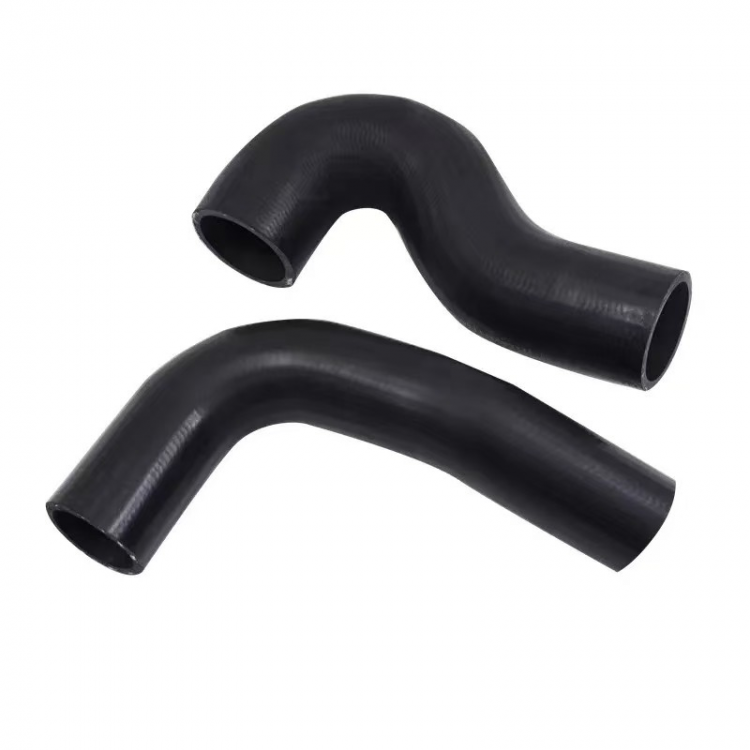
The vehicle cooling system is responsible for the heat exchange and temperature balance of the engine. The structural form, material adaptation, and specification matching of pipeline fittings will directly affect the smoothness and operating status of the cooling system medium circulation. The 90 degree silicone bend pipe is a specialized pipeline accessory for the right angle turning position of the cooling system, which is often used for the transition of pipeline corners in narrow spaces of the engine room, replacing the traditional assembly method of flexible hoses that are bent and spliced in multiple sections. In order to standardize the selection criteria for maintenance replacement, pipeline upgrade, and equipment matching, this article combines conventional vehicle cooling conditions, structural adaptation conditions, and specification matching logic to organize and form a technical guide for this adaptation condition and selection, which can be used as a reference for automotive repair and maintenance, pipeline matching, and modification personnel.
In terms of working condition adaptation, the 90 degree silicone bend pipe is mainly suitable for the conventional cooling water circulation scenario of fuel vehicles, and can undertake the medium circulation operation of the coolant in the low temperature, normal temperature, and high temperature ranges. It is suitable for temperature and pressure changes caused by engine start stop, idle, constant speed driving, and road condition fluctuations. During the operation of the cooling system, the pipelines will continue to be in an environment of alternating cold and hot conditions, vehicle vibration, engine compartment oil contamination, and air oxidation. Ordinary rubber pipes are prone to hardening, cracking, water leakage, deformation, and other conditions after long-term use. The silicone material combined with an integrated molding structure can adapt to the normal working conditions of the cooling system and meet the assembly needs of long-term cyclic use.
From the perspective of environmental adaptation conditions, this type of bend pipe is suitable for the enclosed installation environment of the engine room, and is suitable for the routing points with compact space and vertical turning of pipelines. Forming a 90 degree right angle structure can regulate the direction of pipelines, reduce compression and friction between pipelines and surrounding wiring harnesses, shells, and hardware accessories, and lower the probability of pipeline wear. At the same time, the bent pipes formed by integrated molding have no splicing gaps, and the overall structural stability is stable. They can adapt to the dynamic pressure fluctuations of the cooling system, reduce interface leakage, medium loss and other problems, and are suitable for the replacement and matching of cooling pipelines in household passenger cars, commercial vehicles, and conventional modified vehicles.
The differentiation of product structure and working condition adaptation is mainly based on the pipe wall structure, which is commonly divided into two categories in the market: single-layer silicone structure and multi-layer fiber woven composite structure. The single-layer structure bend pipe is suitable for conventional naturally aspirated vehicles and vehicles driving on regular road conditions, and is compatible with cooling water circuits with small pressure fluctuations, meeting the pipeline usage needs for daily commuting and regular commuting. Multi layer fiber woven composite structure bend pipe, with polyester fiber woven interlayer added inside the pipe wall, has stronger structural support and can be adapted to the cooling pipeline conditions of turbocharged vehicles and lightly modified vehicles. It is also suitable for water environments with relatively frequent pressure fluctuations and wider temperature ranges, and has a wider coverage of suitable working conditions.
The selection of specifications should follow the basic parameters of the original vehicle pipeline, with priority given to matching the four core parameters of pipe diameter, pipe wall thickness, straight pipe length, and corner transition radius. The inner diameter of the pipe mouth should be consistent with the original vehicle pipeline and joint ports to avoid assembly gaps and loose fitting caused by dimensional deviations; The thickness of the pipe wall can be selected according to the vehicle operating conditions. Standard thickness pipe materials are used for conventional operating conditions, and thick composite pipe wall specifications can be selected for scenarios with complex operating conditions and frequent vibrations; The length of the straight pipe section affects the installation space of the pipe clamp and the alignment effect of the pipeline. It is necessary to match the corresponding dimensions with the original installation point spacing; The transition radius of the bend determines the curvature of the pipeline routing, and matching the original vehicle layout can avoid problems such as pipeline pulling, twisting, and interference.
In the logic of scenario based selection, for the conventional scenario of aging replacement of original vehicle pipelines, priority is given to selecting 90 degree silicone bends of the same specifications that are similar in size, structure, and material parameters to the original factory, ensuring that the hole positions, wiring, and assembly points are properly adapted. In the scenario of pipeline rectification and cabin layout optimization, the corresponding transition radius and straight pipe length of the fixed bend pipe can be matched according to the actual routing space, reducing the number of pipeline fittings used. Vehicles with complex working conditions and long-term high-frequency driving can prioritize the use of multi-layer woven composite structure styles, utilizing sandwich structures to enhance the stability of pipe wall structures and adapt to long-term vibration and frequent temperature switching environments.
The correct matching of operating conditions and selection of specifications can keep the cooling system pipeline in a regular and stable flow state, reducing problems such as pipeline deformation, water leakage, aging acceleration caused by size mismatch and unsuitable operating conditions. The 90 degree integrated silicone bend tube, with its fixed structure, material adaptability, and multi specification system, can cover the assembly needs of most vehicle cooling systems' corner pipelines. Strictly following the original vehicle parameters and actual working conditions to complete the selection and assembly can improve the fitting degree of the cooling system pipeline, maintain the stability of the coolant circulation, and provide basic accessory support for the normal operation of the vehicle engine cooling system.